Booking choice: The Kerama Islands snorkeling day trip, from $69 per person. Check dates Tour details
Naha sits on the East China Sea at the southern end of Okinawa Island, and its climate is subtropical. The coldest month still averages about 17°C. The hottest stays near 29°C, and the Japan Meteorological Agency (JMA) says the heat rarely reaches 35°C, because the ocean keeps it in check.
What changes through the year is the rain, the typhoons, the sea temperature and what swims in it. This guide walks through the JMA's own figures for Naha, then the rainy season, typhoon season, the beach and snorkeling months, whale season, the early cherry blossoms and the busy Japanese holidays.
The quick answer
For most visitors the best months are October and April: warm, drier than summer and outside the peak typhoon weeks. Come from late June to July for the sunniest beach weather, and from January to March for humpback whales and cherry blossoms. The rainy season runs from about 10 May to 21 June, and typhoons peak in August.
Which month is best for Okinawa?
October for a balanced trip, April for spring warmth, and July for the sunniest sea. Each has a trade-off.
There is no single best month, because Naha gives you different things at different times. Here is how we would pick.
- October. The JMA describes October as usually sunny and fresh under high pressure. The average high in Naha is about 28°C and the sea is still warm from summer. Typhoons can still come, so keep a spare day.
- April. Highs around 24°C, less rain than the months that follow, and the beaches open for the season. Spring weather swings, the JMA warns: warm southerly days alternate with cooler northerly ones.
- Late June to July. The rainy season ends around 21 June and summer starts at once. July is the sunniest month of the year in Naha, with about 227 hours of sunshine on average. It is hot and humid, though.
- January to March. Cool by local standards, often cloudy, and the only time for whale watching. Cherry blossoms come in late January and February.
For a first trip built around the Kerama Islands, we would choose October or the first half of July. The snorkeling boats run beyond summer too: wetsuits are part of the kit on the Kerama snorkeling day, so a sunny day in November or April still works.
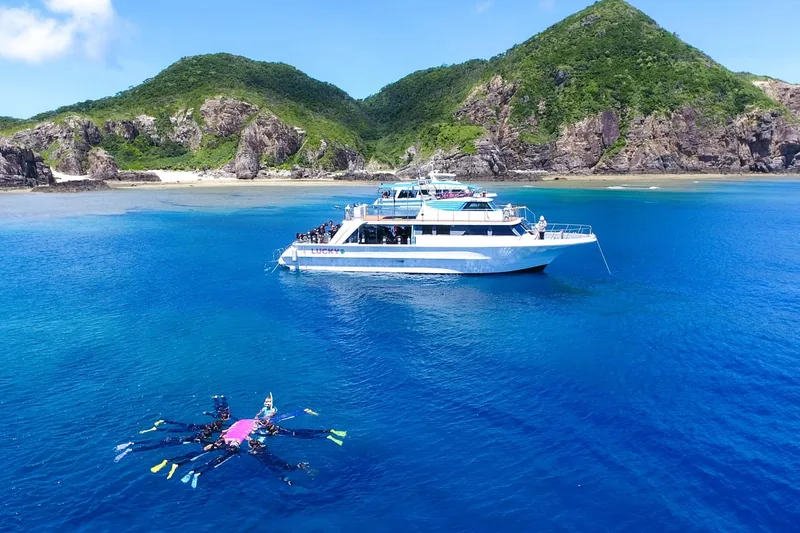
A full day on the reef in Kerama Islands National Park, with pickup in Naha, a wetsuit, a boxed lunch and hot showers on the boat.
Explore the Kerama Islands snorkeling day trip Tour detailsWhat is the weather like in Naha month by month?
Mild winters around 17°C, hot summers near 29°C, and the most rain in May, June and September.
These are the JMA's official normals for its Naha station, averaged over 1991 to 2020. Rain is the monthly total in millimeters; sunshine is total hours in the month.
| Month | Average high | Average low | Rain | Sunshine | What is on |
|---|---|---|---|---|---|
| January | 19.8°C | 14.9°C | 102 mm | 93 h | Whales, first cherry blossoms |
| February | 20.2°C | 15.1°C | 115 mm | 93 h | Whales, cherry blossoms |
| March | 21.9°C | 16.7°C | 143 mm | 115 h | Whales, spring begins |
| April | 24.3°C | 19.1°C | 161 mm | 121 h | Beaches open, Golden Week at the end |
| May | 27.0°C | 22.1°C | 245 mm | 138 h | Rainy season from about 10 May |
| June | 29.8°C | 25.2°C | 284 mm | 160 h | Rainy season ends about 21 June |
| July | 31.9°C | 27.0°C | 188 mm | 227 h | Sunniest month, school holidays |
| August | 31.8°C | 26.8°C | 240 mm | 206 h | Typhoon peak, Obon in some years |
| September | 30.6°C | 25.8°C | 275 mm | 181 h | Typhoons, warm sea |
| October | 28.1°C | 23.5°C | 179 mm | 163 h | Often sunny and fresh |
| November | 25.0°C | 20.4°C | 119 mm | 122 h | More cloudy days, quiet |
| December | 21.5°C | 16.8°C | 110 mm | 107 h | Mild, whale season starts late in the month |
Two things the table does not show. Humidity is high all year, so summer feels heavier than the numbers suggest. And the JMA notes that winter lows rarely fall below 10°C, but low cloud and strong northerly wind can make a January day feel colder than you expect. Pack a light jacket.
The UV index is the other surprise. The JMA's Okinawa office calls summer UV very strong and says it is strong all year compared with mainland Japan. A hat earns its place in the bag even in March.
When is the rainy season in Okinawa?
From about 10 May to about 21 June on average. It starts a month earlier than on the Japanese mainland.
The JMA puts the average start of Okinawa's rainy season (tsuyu or baiu) around 10 May and the end around 21 June, based on 1991 to 2020. The cause is a stationary front where warm tropical air meets cooler air from the north. May and June bring about 245 mm and 284 mm of rain in Naha, the wettest stretch of the year.
It does not rain all day, every day. Showers come and go, and sunny breaks are common. Plan the sea for the brighter days and keep an indoor option in your pocket.
The obvious indoor day is the Churaumi Aquarium, about 90 km north of Naha, where the Kuroshio Tank holds whale sharks and manta rays. The north Okinawa bus tour includes the aquarium ticket and gives you 2.5 hours inside, on a day of 10.5 hours that also stops at Kouri Island and Cape Manzamo. In town, the Okinawa Prefectural Museum and the covered Makishi market keep you dry. The rainy weeks are also when the summer crowds have not arrived yet.
Rain in the forecast? Spend 2.5 hours with the whale sharks at Churaumi, with the aquarium ticket and bus from Naha included.
Check dates for the Churaumi Aquarium and north Okinawa bus tourWhat is typhoon season in Okinawa?
Roughly July to October, with the peak in August. About seven or eight typhoons come near Okinawa in an average year.
The JMA's Okinawa office gives the season as roughly July to October, with approaches possible in May and November too. Its 1991 to 2020 average is 7.7 typhoons approaching Okinawa per year, and the tropical storms approaching the islands peak in August. Typhoons here tend to be stronger than on the mainland, so wind is the main issue.
What that means for a trip:
- Transport can pause. Buses and the Yui Rail monorail may stop during storm warnings, and the JMA says flights and ferries can be cancelled even without one.
- Slow storms last longer. A typhoon that stalls can disrupt plans for several days.
- The sea reacts first. Swell can build while a typhoon is still far away, which matters for boats and snorkeling.
Keep the first and last days of your trip loose, and put the boat day in the middle. Every tour on this site cancels free up to 24 hours before, and the whale watching listing says a trip cancelled for weather or sea conditions can be moved to a new date or fully refunded. Typhoons are forecast days ahead, so you usually see them coming. The JMA updates its forecasts three times a day.
When can you swim in the sea in Okinawa?
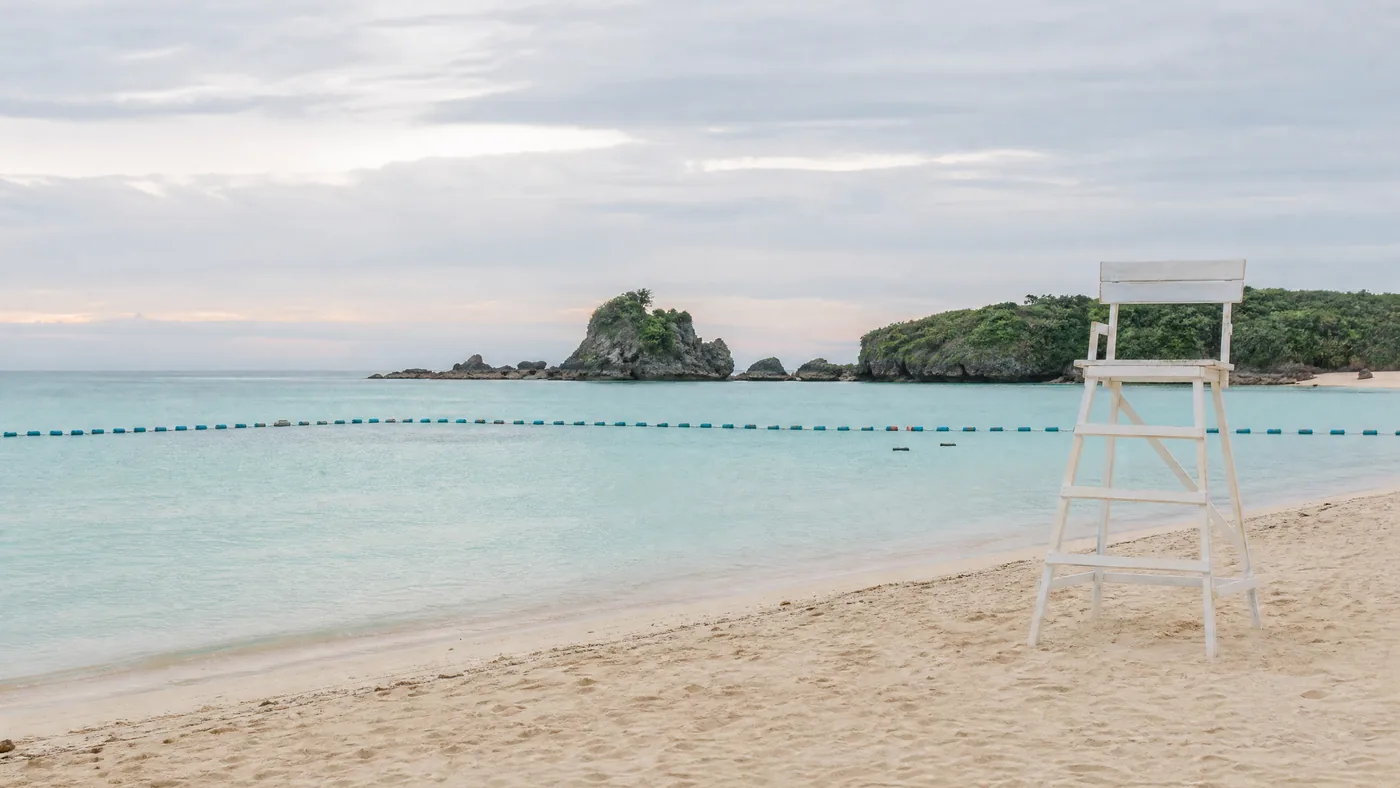
May to October is the best time, and most beaches open their swimming season from April. The sea never drops below 20°C.
japan-guide puts the best beach months on Okinawa Island at May to October. From December to March air temperatures can drop below 20°C, which most people find too cool for a swim, even though the water itself stays above 20°C all year and reaches about 30°C in summer. Beaches set their own swimming seasons: April to October is common, and Sunset Beach next to American Village runs from mid April to November.
Summer has one rule to know. Okinawa Prefecture runs a habu jellyfish advisory every year, and for 2026 it ran from 1 June to 30 September. The habu jellyfish is a box jellyfish. Swim inside the stinger nets at lifeguarded beaches, cover your skin, and bring vinegar: Visit Okinawa says to pour it on a sting, remove tentacles, cool the area and see a doctor. More on sea safety is in our Naha travel tips.
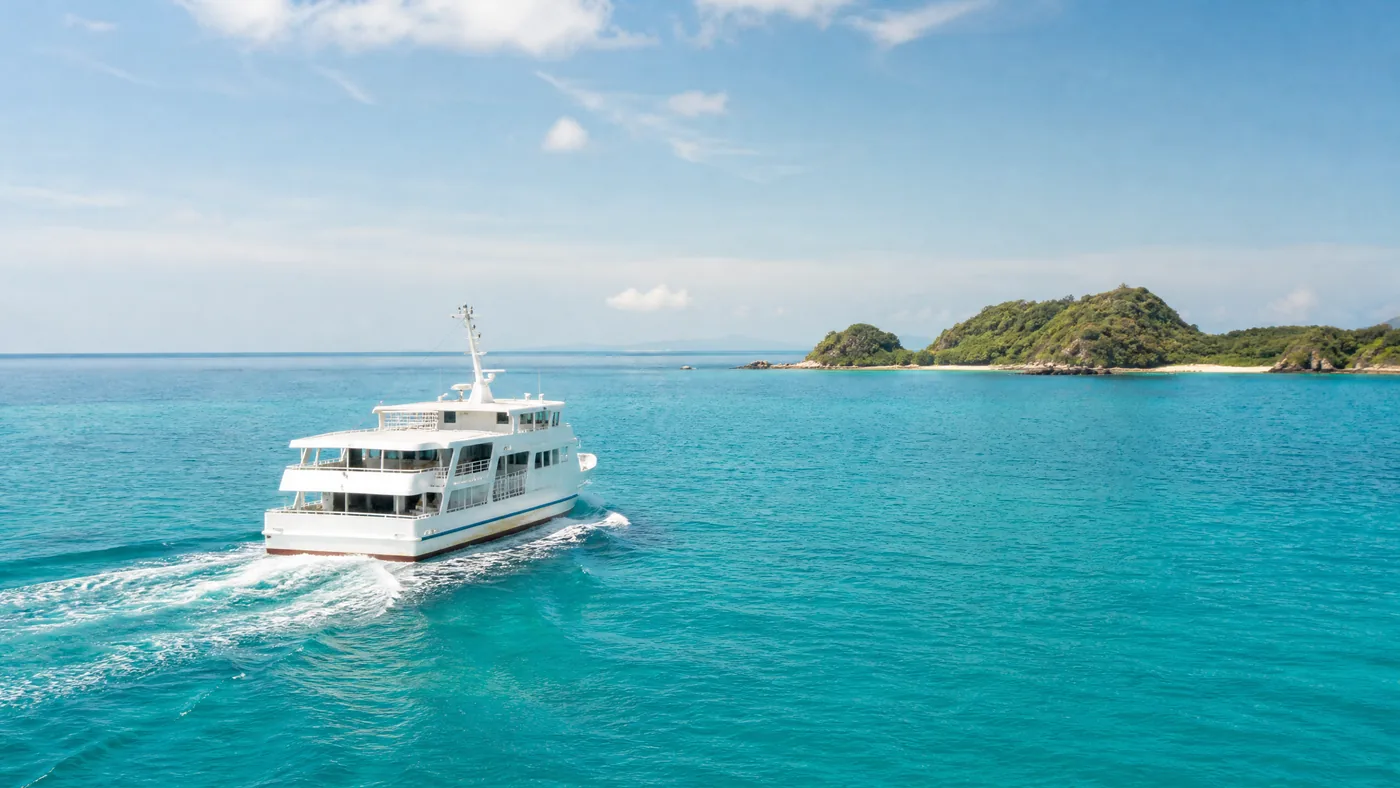
Out in the Keramas the water is some of the clearest around Okinawa, and the national park has protected it since 2014. The snorkeling boat stops at two points for different seascapes, with certified staff in the water and, with luck, sea turtles. One guest wrote about the late season:
★★★★★It was a wonderful experience! The water and islands were beautiful with incredible snorkeling. The guides and crew were knowledgeable and made passengers feel safe.
Snorkel two reef points in the Kerama Islands with certified staff, wetsuit and gear included, then hot showers on the way back to Naha.
Explore the Kerama Islands snorkeling day trip Tour detailsWhen is whale season in Naha?
Roughly late December to early April, best from January to March, when humpbacks come to breed and calve.
Humpback whales spend the winter in the warm water between Naha and the Kerama Islands, where they mate and raise calves. japan-guide gives January to March as the season, and the boats from Naha run from late December. Guests on the Naha tour were still posting whale sightings in late April 2026.
The half-day whale watching tour picks you up at your hotel or a set point in Naha, sails from Naha port and spends about an hour with the whales. It takes 4 hours in all, from $38 per person, with 4.6 stars from 305 reviews on GetYourGuide. The listing's rule if the sea stays empty: a full refund in February and March, and a voucher for another trip in December and January. Pickup needs booking at least two days ahead.
★★★★★It must be borne in mind that these are whales living in the wild. Sightings are not guaranteed, but the team really does its best to find the whales and predict their movements. [...] The team certainly makes every effort to provide a wonderful experience!
Bring a jacket, since the deck is windy in winter, and motion sickness tablets if you need them. The full season, with timing tips, is in our whale season post.
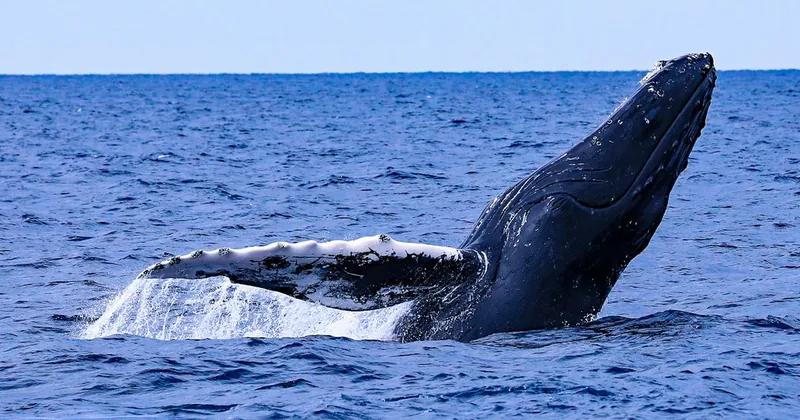
Humpbacks off Naha from late December to early April: hotel pickup, about an hour with the whales and photos from the crew.
Explore the Kerama whale watching trip Tour detailsWhen do cherry blossoms bloom in Okinawa?
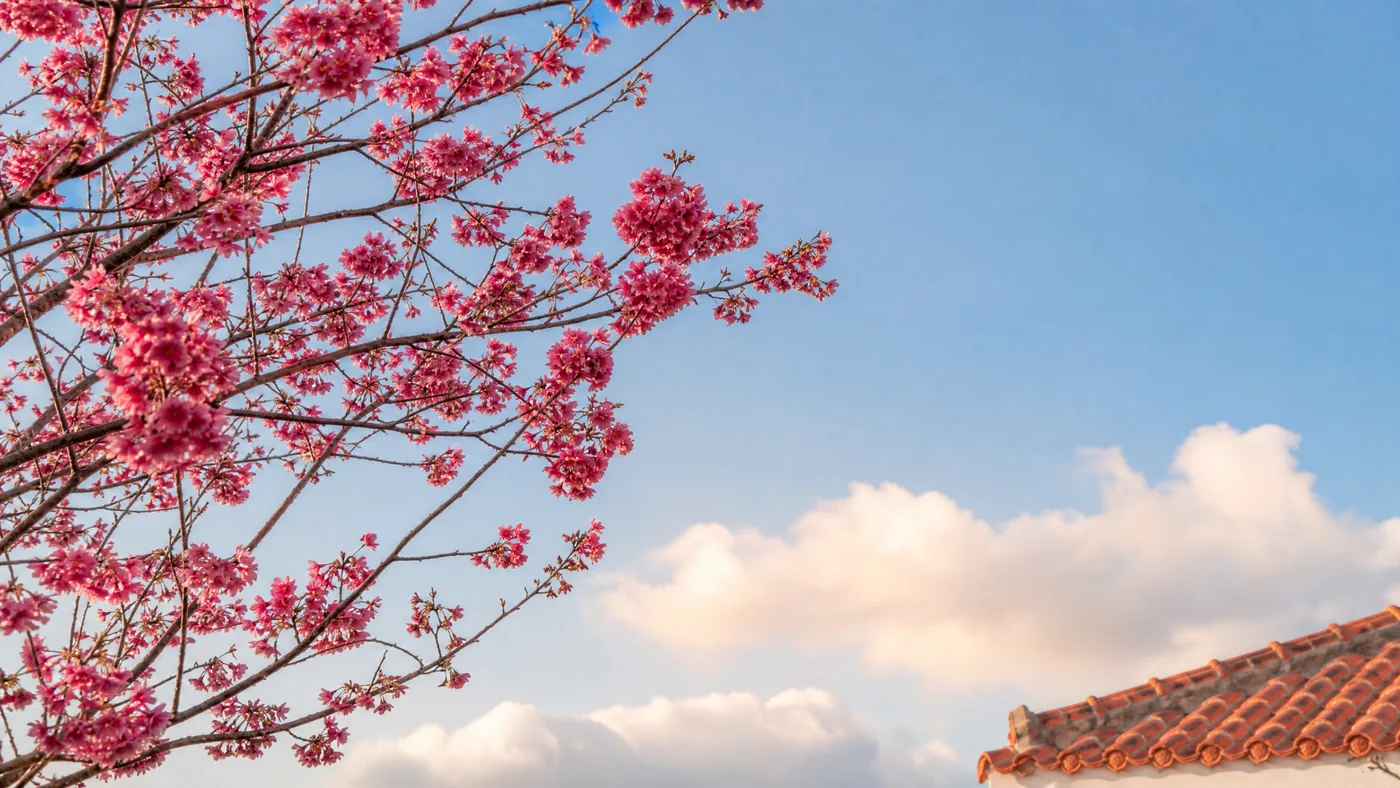
From late January to February, weeks before the rest of Japan. The tree is the deep pink kanhizakura.
Okinawa's cherry is the kanhizakura, with darker pink flowers than the pale trees of Tokyo or Kyoto. japan-guide notes that it blooms earlier, longer and less all at once than farther north: trees flower at different times, even branch by branch, so a spot often stays good for one to two weeks.
| Spot | Usual best time | From Naha |
|---|---|---|
| Yaese Park (south) | Early to mid February | About 60 minutes by bus from Naha Bus Terminal, free |
| Nago Castle Park (north) | Late January to early February | Bus to Nago, then about 10 minutes by bus |
| Yaedake, Motobu Peninsula | Late January to early February | Best by car; festival shuttle from Motobu |
| Nakijin Castle Site | Late January to early February | About 30 minutes by bus from Nago, 1,000 yen |
Nago Castle Park is the only Okinawan spot on Japan's list of 100 best cherry blossom sites, with around 3,800 trees and a festival at the end of January. Yaese Park is the easy one from the city, with about 500 trees on a hill. In 2026 japan-guide found Yaese Park, Nago Castle and Yaedake in full bloom on 9 February.
Blossom season overlaps with whale season, which makes February a strong month for a short winter trip. More ideas for those weeks are in our Naha in winter post.
Winter visit? Pair a blossom walk with a morning on the water: whale boats leave Naha from late December.
Check dates for the Kerama whale watching tripWhen not to visit Okinawa, and when are flights cheapest?
Avoid the Japanese holiday peaks if you can: New Year, Golden Week, the summer school break and Obon. Flights and rooms cost most then.
Okinawa is a favorite holiday spot for travelers from mainland Japan, so fares follow the Japanese calendar. The weeks that fill up first:
- New Year, the end of December into the first days of January.
- Golden Week, the run of national holidays from 29 April to 5 May.
- The summer school break, late July and August, which is also the typhoon peak.
- Obon, the ancestor festival. Visit Okinawa explains that Okinawa keeps it on days 13 to 15 of the seventh month of the lunisolar calendar, so the date moves each year and falls in August or early September. Families gather and eisa drum dancing fills the streets.
For lower fares, look at mid January to February (outside New Year), the rainy weeks of late May and June, and November to mid December. Our view of the worst time: the second half of August, when the school break, the busiest typhoon weeks and the highest prices land together.
And right now? Late November is mild, with average highs around 25°C, quiet streets and more cloudy days, per the JMA. The restored Seiden at Shuri Castle reopens to the public on 23 November 2026, with entry on a timed slot booked on Webket. No tour on this site includes that slot. See our post on the Seiden reopening for how it works.
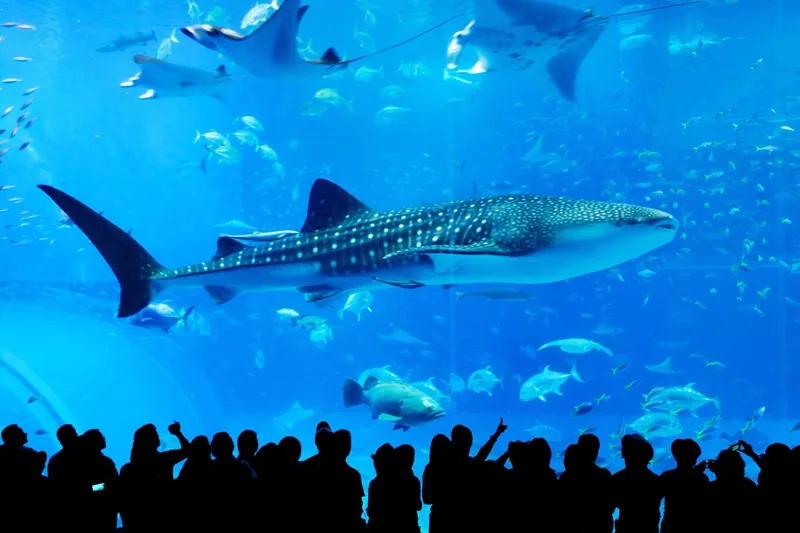
A full day north by bus with the Churaumi Aquarium ticket included: a good plan for any season, rain or shine.
Explore the Churaumi Aquarium and north Okinawa bus tour Tour detailsFrequently asked questions
What is the best month to visit Okinawa?
October for most people: usually sunny, warm, with the sea still around summer temperature. April is a close second. July is the sunniest month, and January to March is the time for whales and cherry blossoms.
When should you not go to Okinawa?
The second half of August is the hardest time: peak typhoon weeks, the summer school break and the highest prices. Golden Week (29 April to 5 May) and New Year are also crowded and expensive.
Is November a good time to visit Naha?
Yes, for a quieter trip. Average highs are about 25°C, the sea is still warm enough for snorkeling in a wetsuit, and crowds are thin. The JMA notes more cloudy days in November, so keep a flexible day for the boat.
Can you swim in Okinawa in winter?
The water stays above 20°C, but from December to March the air can drop below 20°C, which most people find too cool for the beach. Snorkeling tours with wetsuits and whale watching boats are the winter sea days.
Ready to book
Choose your tour
Free cancellation up to 24 hours before on every option. Prices are from-prices in USD and move with the season.
Kerama Islands Snorkeling Day Trip with Lunch
- Round-trip pickup in Naha
- Snorkel gear, wetsuit and towel
- Boxed lunch, water and tea
Kerama Whale Watching from Naha
Humpback whales in half a day, with hotel pickup and photos
Churaumi Aquarium & North Okinawa Bus Tour
- Churaumi Aquarium admission
- Nago Pineapple Park entry and cart ride
- Cape Manzamo admission