Booking choice: The Naha izakaya bar crawl, from $117 per person. Check dates Tour details
japan-guide sums up the difference well: Okinawan cooking was shaped by China, Southeast Asia, Japan and the United States, and by a hot climate that changes what grows and what people want to eat. You taste pork in almost everything, bitter goya, seaweed, tropical fruit, and a rice spirit you will not find anywhere else.
This guide covers the dishes to order, what locals eat for breakfast, how mochiage works at the Daiichi Makishi Public Market, the sweets and fruit, the drinks, how an izakaya works, and what a meal costs in Naha, using official price data.
The quick answer
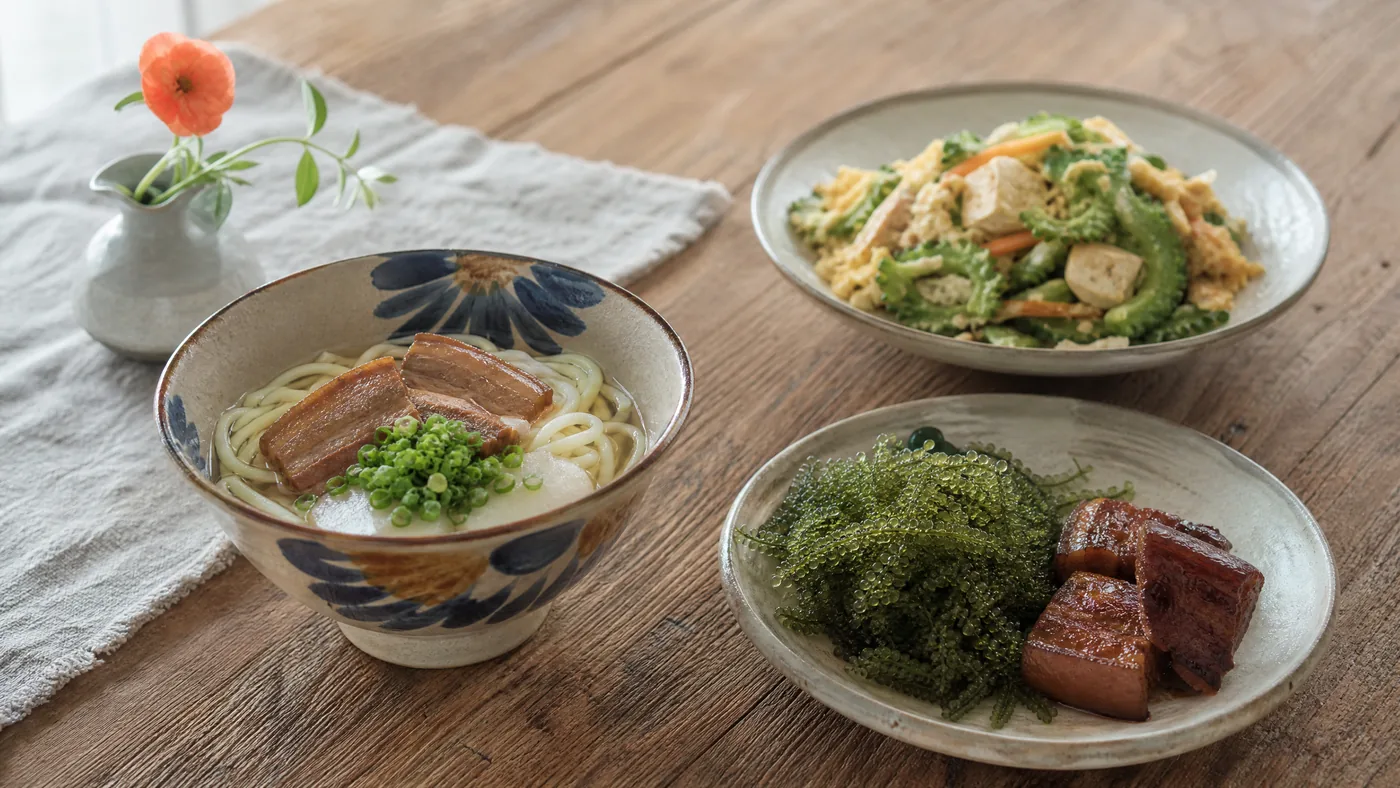
The must eats in Naha are Okinawa soba, goya champuru, rafute (braised pork belly), umibudo (sea grapes) and taco rice, with awamori or Orion beer and Blue Seal ice cream after. Try them at the Makishi market and in the izakaya off Kokusai-dori, where small plates are shared. The drinking age in Japan is 20.
What is a must eat in Okinawa?
Five dishes cover the basics: Okinawa soba, goya champuru, rafute, umibudo and taco rice.
japan-guide calls goya champuru and Okinawa soba omnipresent, at home and in restaurants alike. Here is the short list, with where to find each in Naha.
| Dish | What it is | Where in Naha |
|---|---|---|
| Okinawa soba | Thick wheat noodles in broth; soki soba comes with pork ribs | Soba shops, the Makishi market eateries |
| Goya champuru | Bitter goya stir-fried with tofu, egg and pork or Spam | Any izakaya or Okinawan diner |
| Rafute | Thick pork belly simmered soft in soy sauce and broth | Izakaya and Okinawan restaurants |
| Umibudo (sea grapes) | Small seaweed beads that pop with a salty taste | Izakaya, often as a starter |
| Taco rice | Taco filling, lettuce, tomato and salsa over rice | Casual diners, eaten with a spoon |
| Mimiga | Thin strips of pig's ear with ponzu or peanut dressing | Izakaya small plates |
| Tofuyo | Fermented tofu aged in awamori, eaten in tiny bites | Izakaya, with a glass of awamori |
| Sata andagi | Okinawan doughnuts, crisp outside, soft inside | Market stalls, Kokusai-dori shops |
Rafute started out as food of the Ryukyu royal court before it spread to every table, per japan-guide. Taco rice is the opposite story: an inexpensive filling meal that appeared after the war, when the American presence brought taco flavors to the island.
Two dishes for the adventurous: yagi sashimi, raw goat, and tofuyo, which japan-guide compares to a strong cheese. Order one portion to share.
What is Okinawa soba, and where do you eat it?
A bowl of thick wheat noodles in broth with pork on top. It shares a name with Japanese soba and little else.
Mainland soba is buckwheat. Okinawa soba is made from wheat, so the noodles are closer to udon, served in a bowl of broth like ramen. The classic toppings are pork, green onion, kamaboko fish cake and red ginger. With soft pork ribs on top it becomes soki soba, which the Government of Japan's magazine lists among the dishes served upstairs at the Makishi market.
For a sense of noodle prices, the Statistics Bureau's retail price survey put the average bowl of ramen eaten out in Naha at 787 yen in 2024, a fair guide to what a noodle lunch costs in the city.
Want a guide to order for you? The izakaya crawl serves 5 to 7 Okinawan dishes over three bars off Kokusai-dori.
Check dates for the Naha izakaya bar crawlWhat do Okinawans eat for breakfast?
The local favorite is the pork tamago onigiri: rice, a slice of pork luncheon meat and egg, wrapped in seaweed.
Visit Okinawa describes the pork egg onigiri as a slice of processed pork luncheon meat and a fried egg pressed into rice and wrapped in nori, sometimes with thick miso or island tofu added. Specialty shops make them to order, and convenience stores across the islands sell them ready-made. That makes it the easy breakfast on the way to an early boat pickup.
Other good morning choices in Naha:
- The Makishi market. A pork tamago onigiri shop has a branch there, and sata andagi is sold upstairs.
- Sata andagi and coffee. A cup in a Naha cafe averaged 390 yen in 2024, per the Statistics Bureau survey.
- Sanpin-cha. Okinawan jasmine tea, drunk hot or cold, from every vending machine.
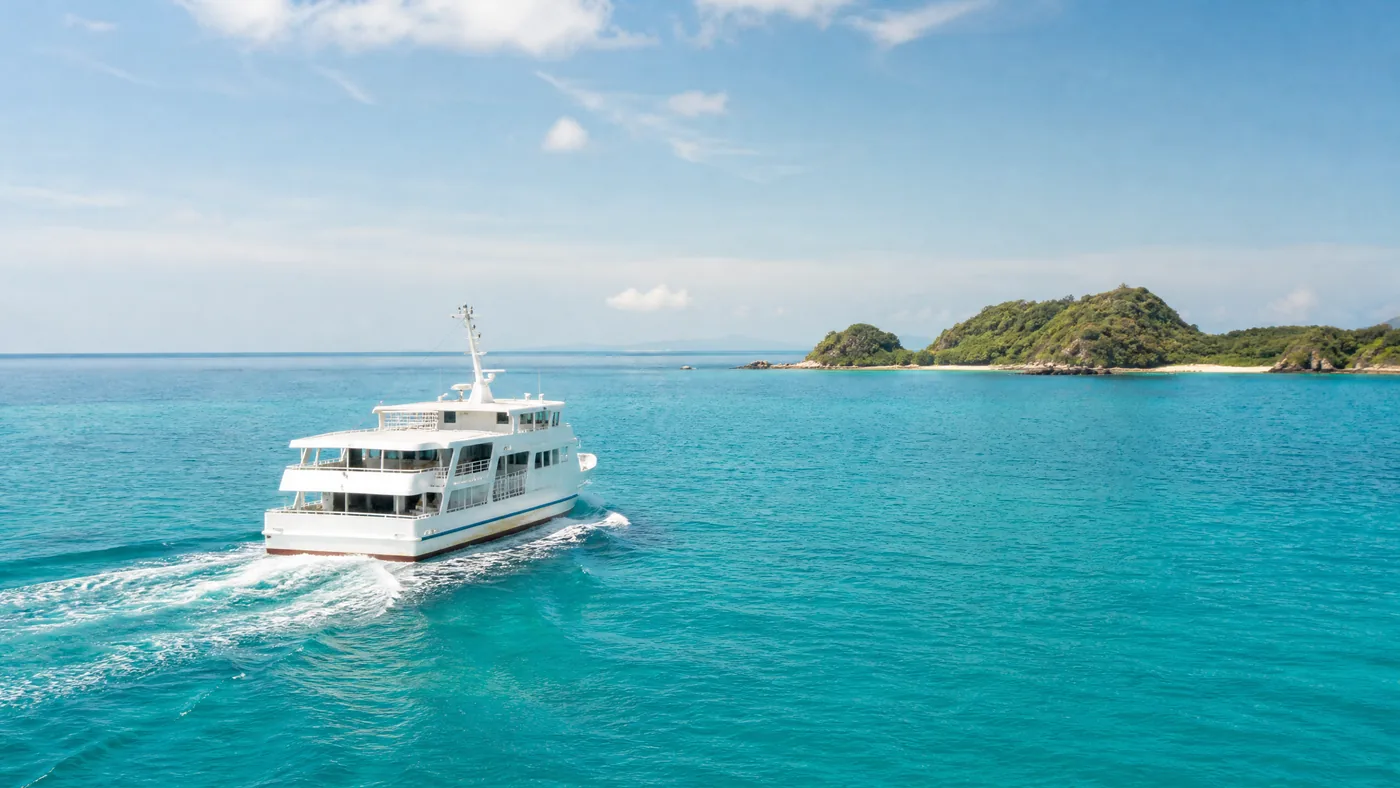
If you are on the Kerama snorkeling day, eat light: the boat serves a boxed lunch, water and tea, and swimming on a full stomach is no fun on a swell.
How does mochiage work at the Makishi market?
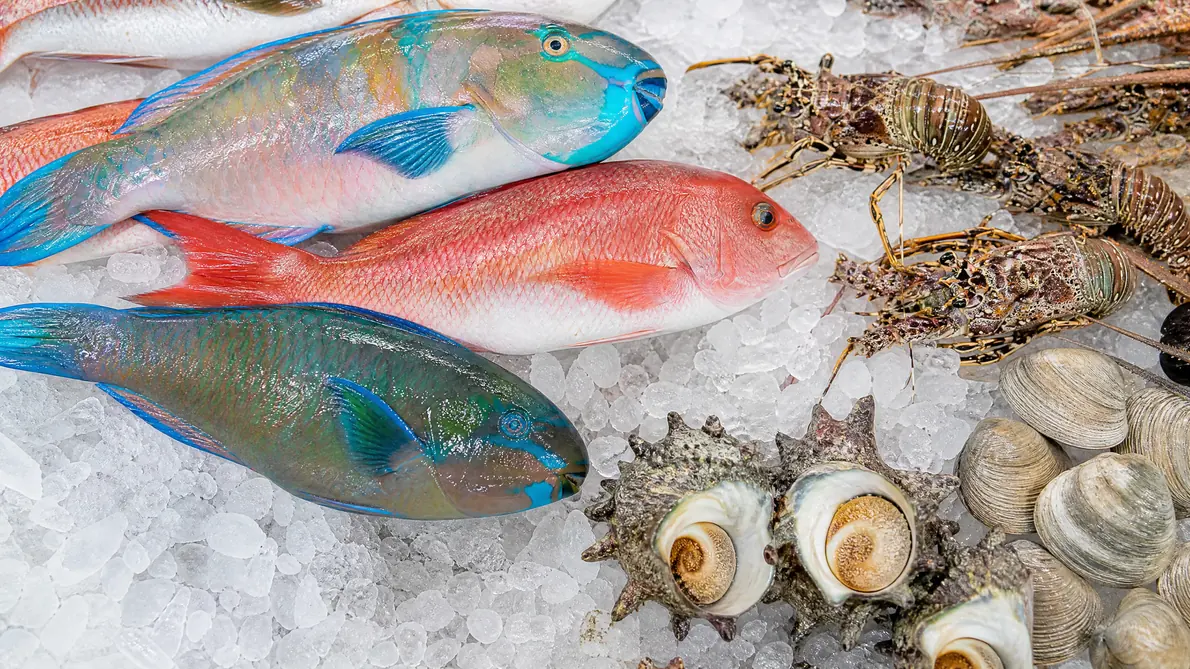
Buy seafood or meat on the ground floor, then a restaurant upstairs cooks it for a separate cooking fee.
The Daiichi Makishi Public Market has been Naha's city market since December 1950 and reopened in a new building on its original site in March 2023. The ground floor has about 75 shops: fish, meat, produce, dried goods, drinks and souvenirs. The second floor has 12 eateries, and the third holds a cooking room.
Mochiage has run since 1990, and it works like this:
- Pick your fish downstairs. Reef fish in bright colors, spiny lobster, shellfish, or Okinawan pork and beef.
- Pay the shop. Staff can suggest a restaurant upstairs that suits what you bought.
- Carry it up. The restaurant cooks it as sashimi, grilled, as steak or shabu-shabu, and charges its own cooking fee.
The upstairs restaurants also run a normal menu: soki soba, champuru, rafute, taco rice and deep-fried gurukun, the prefecture's fish. They stay open later than the rest of the market, per the Government of Japan's magazine. Ask the price per weight before the fish goes on the scale, and agree on how it will be cooked.
The market sits a short walk off Kokusai-dori along Ichiba Hondori. For more of the city around it, see our guide to things to do in Naha.
What sweets should you try in Naha?
Sata andagi doughnuts, Blue Seal ice cream and Okinawa zenzai, a shaved ice dessert with sweet beans.
Sata andagi is the Okinawan doughnut, made from sugar, flour and eggs. Visit Okinawa describes it as crisp outside and moist but not too sweet inside, in plain, brown sugar, pineapple and sweet potato flavors. A light toasting brings a day-old one back to life.
Blue Seal ice cream began in 1948 on a US military base, made for American soldiers, and started selling to Okinawans in 1963. Today it is everywhere: shopping streets, malls and tourist spots. Look for the local flavors, such as sweet potato, sugarcane, salted chinsuko cookie and Blue Wave.
Okinawa zenzai is nothing like the hot bean soup of the mainland. Here it means sweet kintoki beans under shaved ice with shiratama rice dumplings: a summer dessert.
For souvenirs, chinsuko shortbread and brown sugar keep well in a suitcase. Fried American-style pies, in sweet potato or taimo, are another Okinawan habit Visit Okinawa points out.
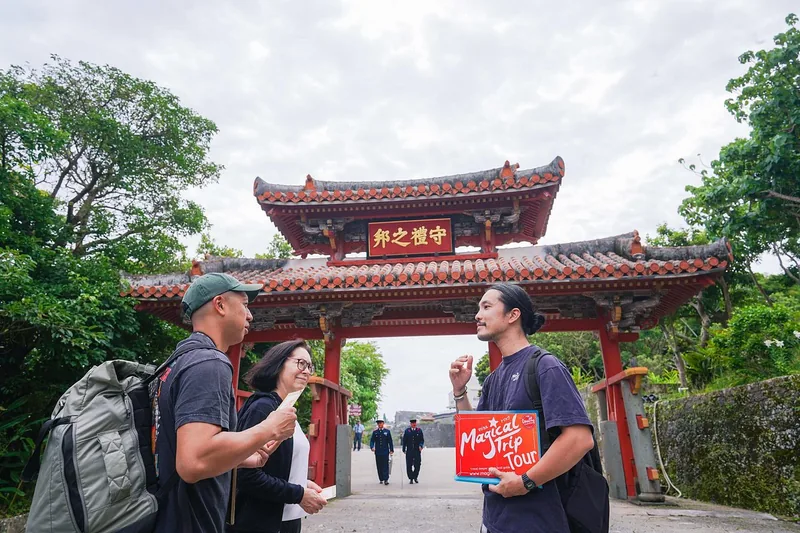
A morning in Shuri with a local guide and a traditional Okinawan lunch chosen from a full menu, with castle and Tamaudun fees included.
Explore the Shuri Castle Peace Walking Tour Tour detailsWhat fruit is Okinawa famous for?
Mango, pineapple and the small green citrus shikuwasa, plus dragon fruit, passion fruit and the winter citrus tankan.
Visit Okinawa's fruit guide lists what the islands grow:
- Mango. The season runs from June to August. The reddish apple mango ripens first, the green Keats mango after it.
- Pineapple. Grown mainly in the north, where the soil drains well.
- Shikuwasa. A small, sharp citrus like a lime, picked green and squeezed over fish or into drinks. Ogimi and Nago are the growing areas.
- Dragon fruit and passion fruit. Eat passion fruit with a spoon when the skin wrinkles.
- Tankan. A sweet citrus from the north, eaten in winter.
- Acerola and star fruit. Acerola mostly as juice; star fruit grows in Haebaru, south of Naha.
The Makishi market and the produce stalls around it sell whatever is in season, and in summer the shaved ice shops pour fresh fruit over the top. The north Okinawa bus tour starts its day at Nago Pineapple Park, with entry and the cart ride included, before the aquarium.
See where the pineapples grow: the north bus day stops at Nago Pineapple Park, then Kouri Island and the Churaumi Aquarium.
Check dates for the Churaumi Aquarium and north Okinawa bus tourDo they drink alcohol in Okinawa?
Yes. Awamori and Orion beer are the island drinks, and izakaya are where people drink them. You must be 20 or older.
Awamori is Okinawa's own spirit, usually 30% to 40% alcohol. japan-guide explains how it differs from mainland shochu: it is distilled from long-grain Thai-style rice with a black koji mold native to Okinawa. Order it on the rocks, with water, or in a cocktail. Orion beer is the local lager, light and cold, with a brewery in Nago. You also meet habu-shu, awamori with a habu snake in the bottle.
The legal drinking age in Japan is 20, and bars and tours check it. In an izakaya, people order many small plates for the table and share them, and the toast in Okinawan is "karii". You do not tip in Japan. Some places along Kokusai-dori add live Okinawan music, with sanshin, the three-stringed snakeskin lute.
The easiest way into the back-alley bars is the Naha izakaya bar crawl. You meet your guide at Tenbusu Naha on Kokusai-dori, walk to three different bars, and eat 5 to 7 local dishes, enough for dinner. At least three drinks are included, and the second and third stops are all-you-can-drink. The last bar has sanshin music. It runs 3.5 hours, from $117 per person, for guests 20 and over, with 4.8 stars from 95 reviews on GetYourGuide. Vegetarian options are limited, the listing says.
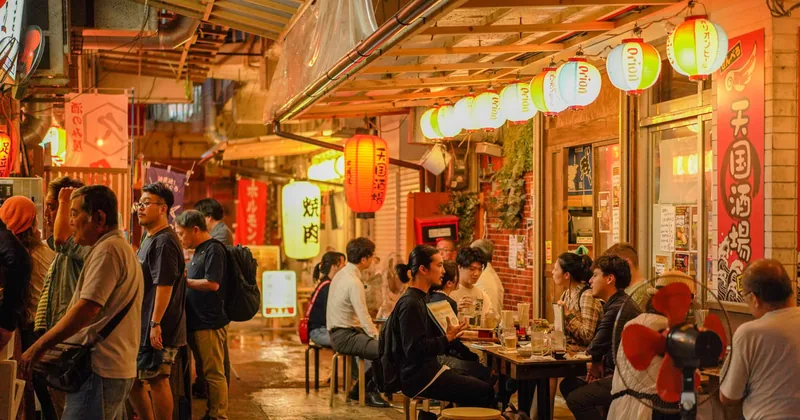
Three izakaya off Kokusai-dori with a local guide: 5 to 7 Okinawan dishes, Orion beer, awamori and sanshin music at the last bar.
Explore the Naha izakaya bar crawl Tour detailsHow expensive is food in Okinawa?
Everyday food prices in Okinawa run a little above the national average, and above Tokyo's. A noodle lunch is still under 1,000 yen.
The Statistics Bureau of Japan publishes a regional price index each year, with the national average set at 100. Its 2025 figures surprise people:
| Price index, 2025 | Okinawa | Tokyo |
|---|---|---|
| All goods and services | 100.4 | 104.2 |
| Food | 106.6 | 102.9 |
Okinawa is cheaper than Tokyo overall, but its food index is higher. For a trip budget, real Naha prices from the 2024 retail survey help more than an index:
- A bowl of ramen eaten out: 787 yen on average.
- A coffee in a cafe: 390 yen.
- A 500 ml bottle of beer in an izakaya: 725 yen.
Two noodle lunches with a beer each come to roughly 3,000 yen at those prices. Taco rice and onigiri keep lunch cheaper. Dinner at an izakaya depends on how many plates you order, and the mochiage fish at the market is priced by weight, plus the cooking fee. The izakaya crawl puts dinner and drinks into one price.
Planning the rest of the trip budget? Our Naha travel tips cover money, transport passes and what to pack.
Frequently asked questions
What is a must eat in Okinawa?
Okinawa soba, goya champuru, rafute (braised pork belly), umibudo (sea grapes) and taco rice. Add sata andagi doughnuts and Blue Seal ice cream for something sweet, and awamori or Orion beer to drink.
What do Okinawans eat for breakfast?
The local favorite is the pork tamago onigiri: rice, a slice of pork luncheon meat and egg wrapped in seaweed, sold at specialty shops and convenience stores. Sata andagi with a coffee is the sweet alternative.
What is the drinking age in Okinawa?
20, as everywhere in Japan. Bars check it, and the Naha izakaya bar crawl only takes guests aged 20 and over.
Is food expensive in Okinawa?
A little. In the Statistics Bureau's 2025 index, food in Okinawa is 6.6% above the national average and above Tokyo. A bowl of ramen in Naha averaged 787 yen in 2024, and an izakaya beer 725 yen.
Ready to book
Choose your tour
Free cancellation up to 24 hours before on every option. Prices are from-prices in USD and move with the season.
Naha Izakaya Bar Crawl with a Local Guide
- Five to seven local dishes
- Three or more drinks, all-you-can-drink at the 2nd and 3rd bars
- A local guide
Shuri Castle Peace Walking Tour
Shuri Castle and the royal tomb with a local guide, fees and an Okinawan lunch included

Kerama Islands Snorkeling Day Trip with Lunch
- Round-trip pickup in Naha
- Snorkel gear, wetsuit and towel
- Boxed lunch, water and tea