Booking choice: The Kerama Islands snorkeling day trip, from $69 per person. Check dates Tour details
This guide answers the practical questions people ask before a trip to Naha. Safety at night and in the sea, the snakes and the jellyfish, whether you can drink the tap water and how much English you will hear. Then the paperwork, the money, and how to get around without a car.
Where we give a rule or a number, we name the official source in plain text: the Japan Meteorological Agency, Okinawa Prefecture, Visit Okinawa, JNTO, the Statistics Bureau of Japan and the Ministry of Foreign Affairs of Japan.
The quick answer
Naha is a calm city to walk at night, and Kokusai-dori stays busy late. Swim at netted, lifeguarded beaches, especially from June to September, when the habu jellyfish advisory runs. Tap water is safe to drink. Use the Yui Rail monorail and an IC card such as Suica or OKICA in the city, and a tour or rental car for the rest of the island.
Is it safe to walk around Naha at night?
Yes. Central Naha is lively late, and Kokusai-dori is lit and busy well into the night. Use ordinary city sense.
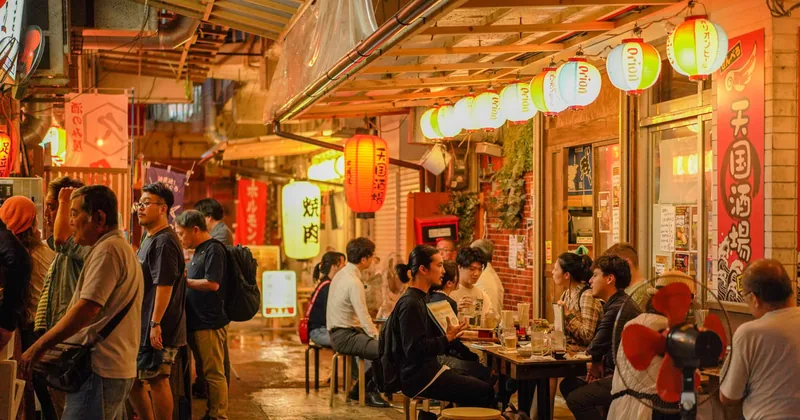
JNTO describes Kokusai-dori as a street of about 1.6 km where many shops stay open until 23:00 and the nightlife runs until dawn. The street closes to traffic on Sundays, and Saturday night brings out the street performers. You will share it with families, travelers and people heading to the izakaya in the side alleys.
A few habits that help:
- Save the emergency numbers. In Japan, dial 110 for the police and 119 for an ambulance or the fire service.
- Mind the drinks. Awamori is usually 30% to 40% alcohol, stronger than it tastes in a cocktail.
- Stay on paths after dark. Habu snakes are active at night in grass and woods, Okinawa Prefecture says, and can turn up in small city parks.
- Know your last train. Check the time of the last Yui Rail train back to your station before the evening starts.
Want company for the night? The izakaya bar crawl meets at Tenbusu Naha and walks a small group through three bars off the main street.
See Naha after dark with a local: three izakaya, Okinawan food, drinks and sanshin music, from Tenbusu Naha.
Check dates for the Naha izakaya bar crawlIs it safe to swim in the ocean in Okinawa?
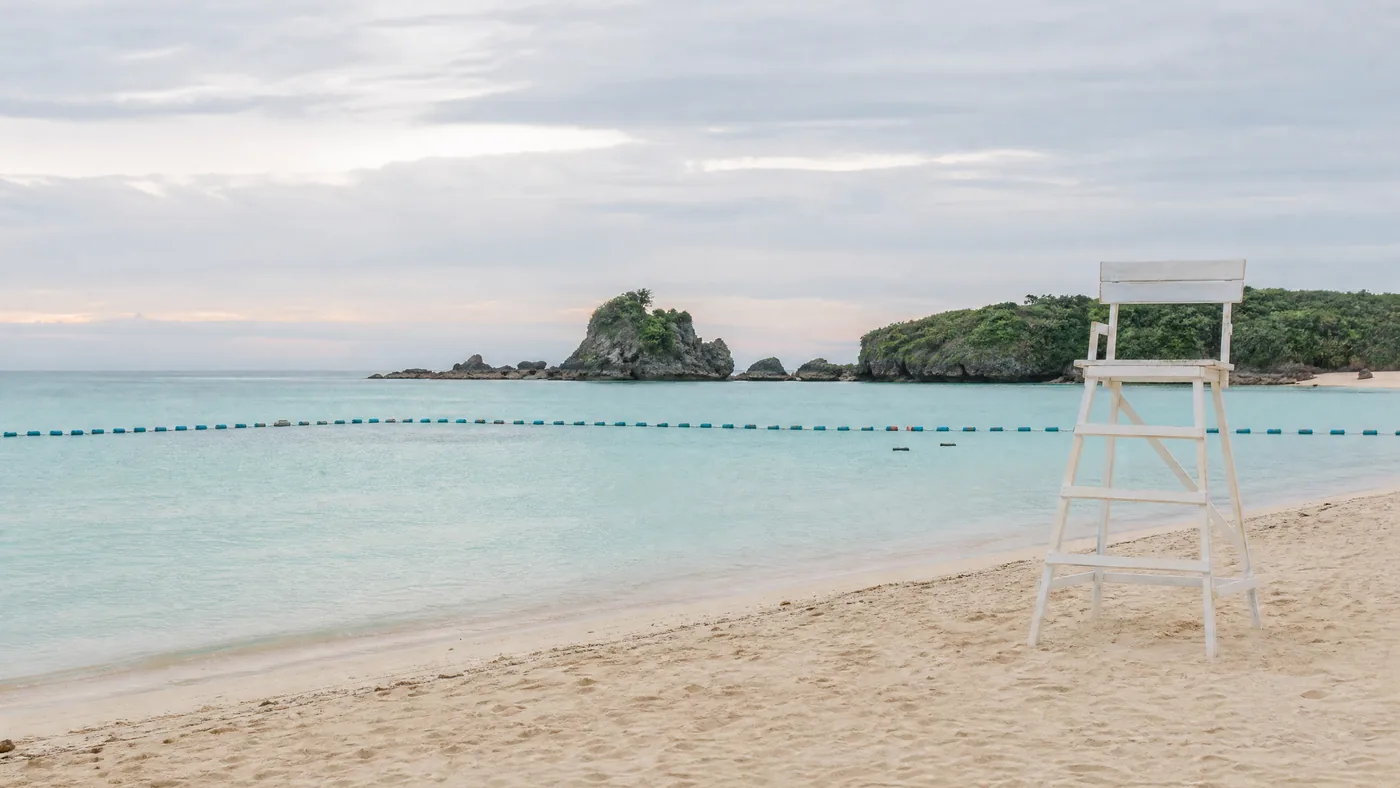
Yes, at the right beach. Swim inside stinger nets with lifeguards, watch for currents, and follow the summer jellyfish advice.
japan-guide names the two risks at Okinawan beaches: strong currents that can pull you out, and venomous sea life such as the habu jellyfish, a box jellyfish most common from June to October. Signs at beaches warn about both, and many beaches net off their swimming areas.
Okinawa Prefecture's habu jellyfish advisory for 2026 ran from 1 June to 30 September. Its advice, via Visit Okinawa:
- Stay inside the nets. Swim in the safe zone at a staffed beach.
- Cover up. Expose as little skin as possible; a rash guard helps.
- Bring vinegar. If stung, pour it on generously, remove any tentacles, cool the area with ice or cold water, and see a doctor.
On sharks: lifeguards close the water when one is sighted, and reopen it once the area is clear. In July 2026 Naminoue Beach in central Naha closed for about a day after small sharks were seen near the shore; experts from the Churaumi Aquarium judged them low risk, and swimming resumed the next afternoon.
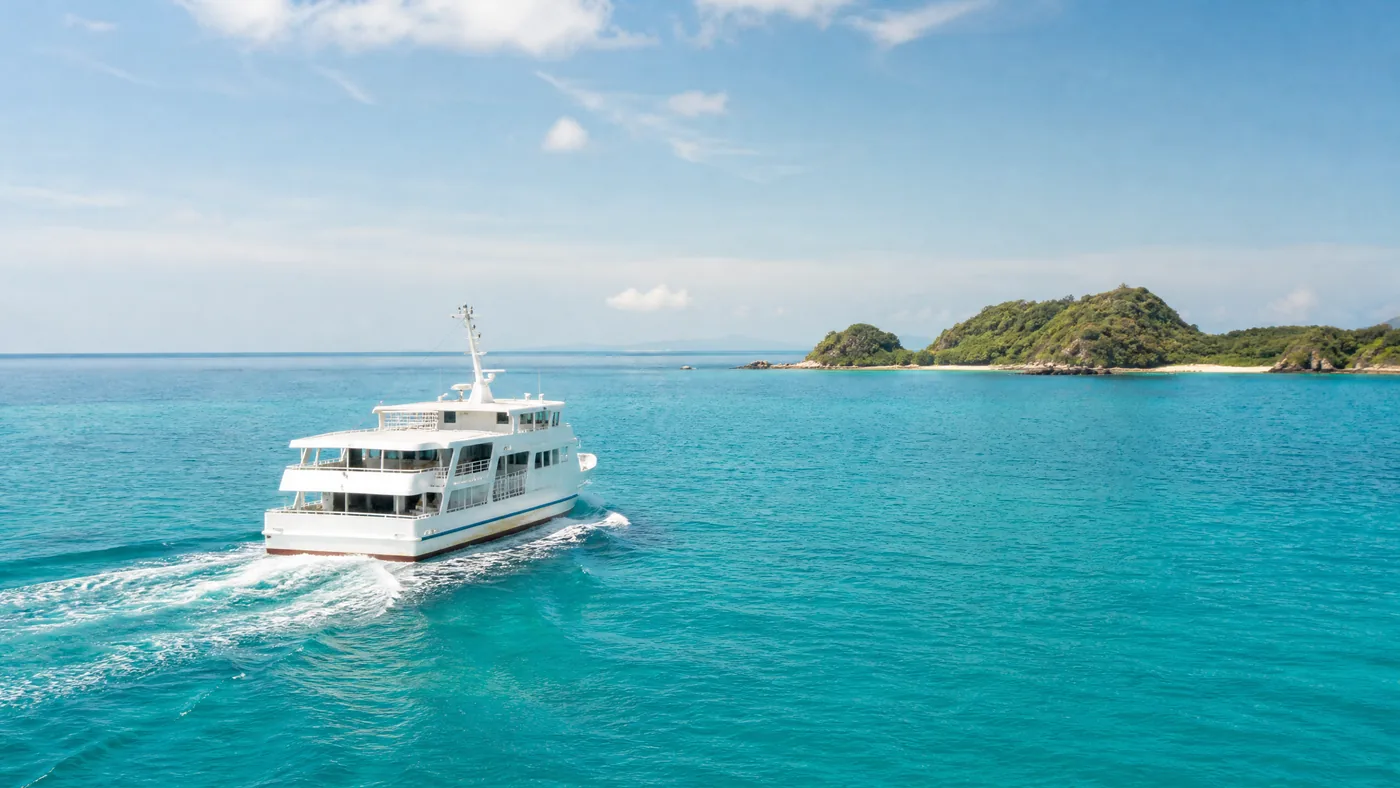
For open water, go with a crew. On the Kerama snorkeling day, certified staff guide you in the water at two reef points, and everyone fills in a health checklist at the Naha office before boarding. The listing does not take pregnant guests or people with epilepsy.
★★★★★Fun, well organised, all inclusive and very well on time, beautiful snorkel session with very knowledgeable guide
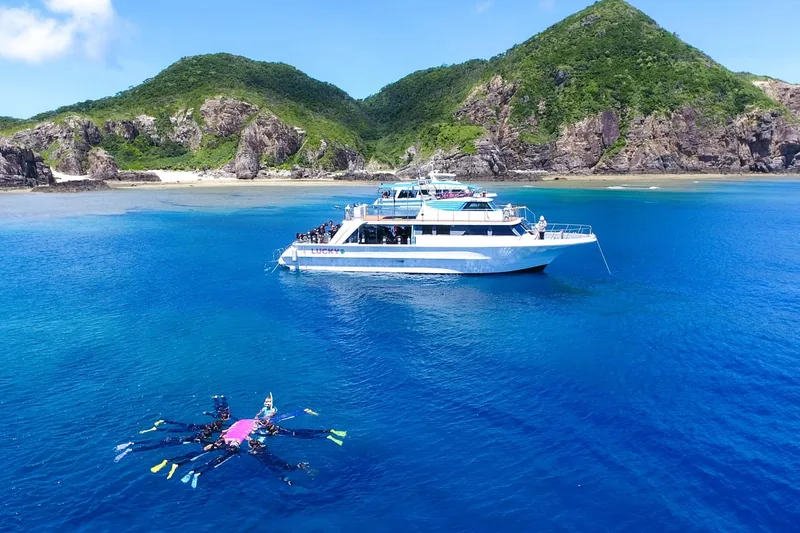
Snorkel the Keramas with certified staff beside you, gear and wetsuit included, with pickup in Naha and lunch on board.
Explore the Kerama Islands snorkeling day trip Tour detailsAre there snakes, sharks and mosquitoes in Okinawa?
Yes to all three, and simple habits keep them out of your trip: paths at night, nets in the sea, repellent in summer.
Habu snakes. The habu is a venomous pit viper up to about 2 m long. Okinawa Prefecture says it hides by day and comes out after sunset, mostly in woods, grassland, sugar cane fields and stone walls, sometimes small parks. If bitten: stay calm, call 119, and walk slowly or get driven to hospital, since running spreads the venom. No painkillers or alcohol. Visitors who stay on streets and paths rarely meet one.
Sea creatures. OIST's safety pages list lionfish, sea snakes and cone shells alongside the habu jellyfish. The rule is simple: look, do not touch.
Mosquitoes. They are part of warm-weather life here, including the Asian tiger mosquito. Okinawa Prefecture's health centers advise long sleeves and long pants, insect repellent, and avoiding bare feet in sandals near greenery. Repellent is sold at every drugstore and convenience store.
Sharks. They live in Okinawan waters, as in any tropical sea. Beaches with lifeguards watch for them and close the water when needed, and tour boats choose their snorkeling points with care.
Is English widely spoken in Okinawa, and how do you say hi?
More than in most of Japan, thanks to the US presence. Say "haisai" for hello; locals will love it.
Japanese is the everyday language, and many older Okinawans also speak Okinawan (Uchinaaguchi), a separate Ryukyuan language. Wikivoyage notes that English is better catered for than usual in Japan because of the US military bases on the island, mostly in its center and north: restaurants in tourist areas almost all have English menus. The Naha City Tourist Information Center on Kokusai-dori has English-speaking staff and free Wi-Fi.
A few Okinawan words go a long way:
| Okinawan | Meaning | When to use it |
|---|---|---|
| Haisai / haitai | Hello | Any time of day; haitai is the softer form often used by women |
| Mensore | Welcome | You will hear it at shops and the airport |
| Nifee debiru | Thank you | After a meal or a favor |
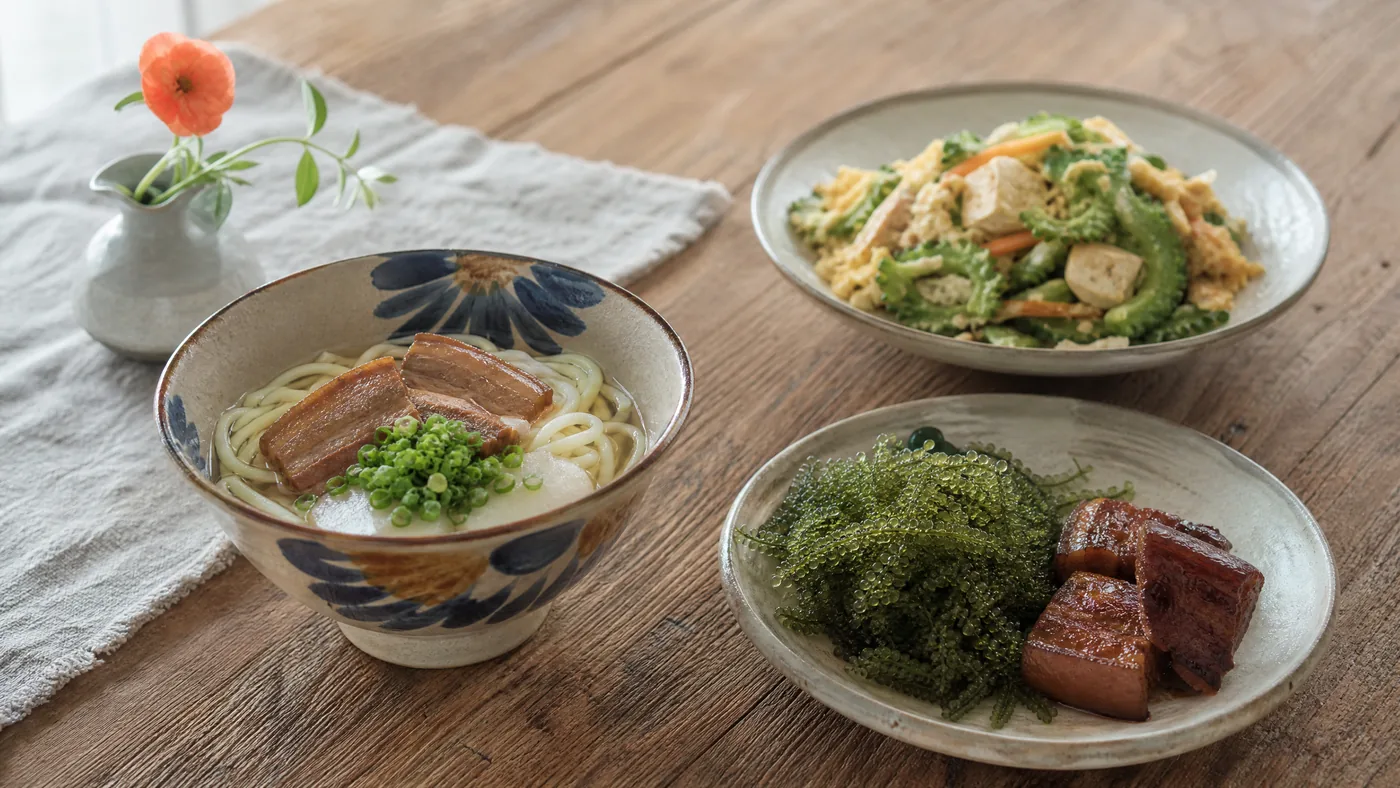
| Karii | Cheers | When glasses go up in an izakaya |
OIST notes that most locals speak Okinawan-flavored Japanese and that Uchinaaguchi itself is listed as endangered by UNESCO, which is why the City of Naha has run campaigns to keep greetings like haisai in use. For everything else, a translation app and a smile work fine.
Prefer a guide who speaks English? The Kerama snorkeling crew briefs you on the upper deck before you get in the water.
Check dates for the Kerama Islands snorkeling day tripCan I drink tap water in Naha?
Yes. Tap water in Naha is treated, tested and safe to drink. It may taste faintly of chlorine.
The Okinawa Prefectural Enterprise Bureau, which runs the main water treatment plants, says its water is disinfected with chlorine to make it drinkable and that inspection results conform to the criteria set by law. It publishes the results every year. The faint chlorine taste is the residual disinfectant, which the bureau says is needed for safety.
Fill a bottle at your hotel before a day out. In summer you will drink more than you expect, and the izakaya tour listing itself recommends carrying water in the hot months. Vending machines on almost every corner sell cold water and sanpin-cha, Okinawan jasmine tea.
How should you dress in Okinawa?
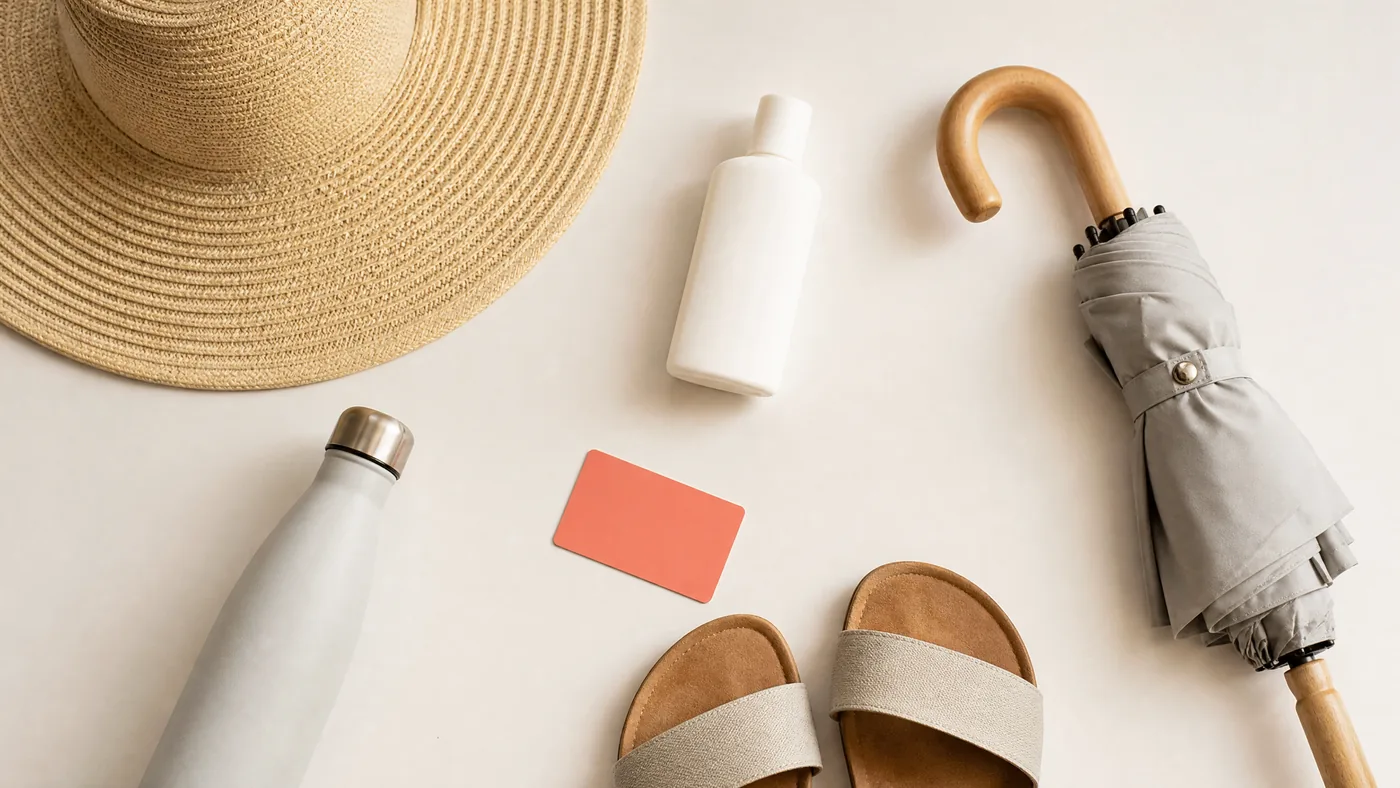
Light, breathable clothes most of the year, a hat and sunscreen in every season, and a light jacket from December to March.
The JMA's Okinawa office gives the two facts that shape your suitcase. Summer highs rarely go past 33°C, but humidity is always high, so it feels sticky. And UV is very strong in summer and strong all year compared with mainland Japan, so cover up on the beach and use a hat or parasol in town.
| Season | Average high in Naha | What to pack |
|---|---|---|
| December to February | About 20°C to 22°C | Long sleeves, a light jacket for wind, layers |
| March to May | About 22°C to 27°C | T-shirts, a thin layer, an umbrella from May |
| June to September | About 30°C to 32°C | Light cotton or linen, hat, sunscreen, rash guard |
| October and November | About 25°C to 28°C | Summer clothes, one long-sleeved top |
Jeans are fine in Naha, just warm in summer. Okinawans dress casually. Pack shoes that slip off easily, since some restaurants and historic buildings ask you to remove them. For the boats, bring swimwear and a towel you do not mind getting salty; the Kerama tour supplies the wetsuit and a towel.
Do you need a visa, and is Okinawa expensive?
Okinawa follows the same entry rules as the rest of Japan. Overall it costs a little less than Tokyo, but food costs a little more.
Visas. There is no separate entry rule for Okinawa: you enter Japan, often straight into Naha Airport, and the national rules apply. Japan lets citizens of many countries visit for short stays without a visa; the Ministry of Foreign Affairs of Japan keeps the current list and the length of stay for each. Check it for your passport before you book.
Is Okinawa expensive? The Statistics Bureau of Japan's 2025 regional price index sets the national average at 100. Okinawa scores 100.4 overall and Tokyo 104.2, the highest in Japan. Food is the exception: 106.6 in Okinawa against 102.9 in Tokyo. In practice, a noodle lunch in Naha runs under 1,000 yen and a coffee about 390 yen, per the 2024 retail survey for Naha. Hotels and flights swing most with the season, so the Japanese holiday peaks in our best time to visit guide matter more than the price of dinner.
Paying. An IC card covers the monorail, and most hotels, shops and tours take cards. Carry some cash for buses, small eateries and market stalls.
Is Okinawa like the Caribbean? In the sense of warm, clear water and white sand on the outer islands, yes. On land, it is very much Japan, with Ryukyu roots of its own.
How do you get around Naha?
By Yui Rail monorail and city bus inside the city. For the rest of the island, take a tour or rent a car.
Naha has no trains, but the Yui Rail monorail runs from Naha Airport through the center to Shuri and on to Tedako-Uranishi, 19 stations in all. It meets Kokusai-dori at Makishi and Asahibashi stations, and Asahibashi is near Naha Bus Terminal.
| Way to travel | Cost | Best for |
|---|---|---|
| Yui Rail monorail | 360 yen from the airport to Shuri, 27 minutes | The airport, Kokusai-dori, Shuri Castle |
| Yui Rail with a credit card tap | Capped at 800 yen a day | A day of hopping between sights |
| City bus | Flat 240 or 260 yen in central Naha | Naminoue, Tomari Port, places off the monorail |
| Rental car | Varies by season | The north, the south coast, beaches |
| Bus or boat tour | From $47 for a full day by bus | Churaumi, the south, the Kerama Islands |
Cards and passes. The monorail takes Suica and nine other national IC cards, plus the local OKICA. Since 28 March 2025 you can also tap a contactless credit card at the gate, and the Ryukyu Shimpo reports that the fare is capped at 800 yen a day, so it works as a day pass without buying one. Paper day passes exist too. City buses take OKICA and cash, per Wikivoyage.
Driving. japan-guide says a rental car is not needed for Naha itself, but it is the easiest way to see the island, since buses are slow outside the city. Traffic is heavy in central Naha at rush hour, scooters overtake fast, and Japan drives on the left. To drive you need an International Driving Permit under the 1949 Geneva Convention, or a Japanese licence or official translation where your country qualifies.
Rather not drive? The north Okinawa bus tour and the south Okinawa bus tour board in central Naha and do the driving for you, and the Kerama boats pick you up at Naha hotels and set points. Start points differ by tour, so check yours. Where each day really goes is in our day trips from Naha guide.
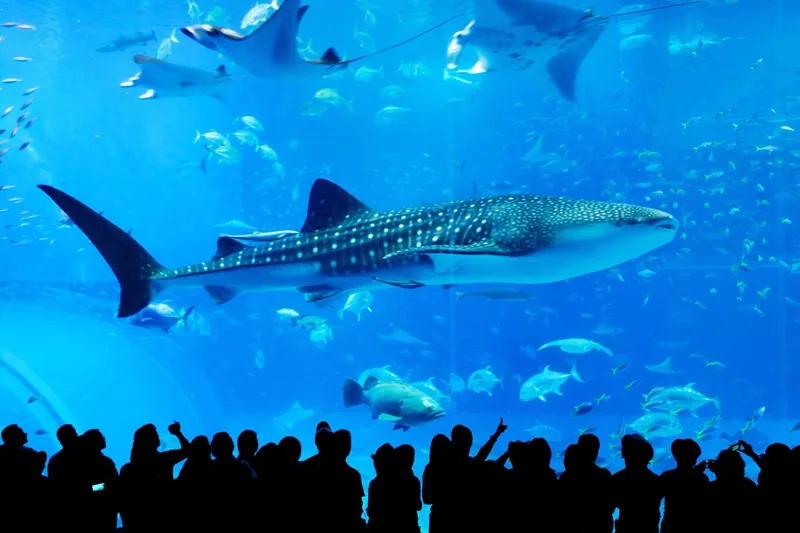
Let someone else drive: a full day north by bus from central Naha with Churaumi, Kouri Island and Cape Manzamo.
Explore the Churaumi Aquarium and north Okinawa bus tour Tour detailsFrequently asked questions
Is Naha safe at night?
Yes. Kokusai-dori stays busy late, and JNTO says many shops are open until 23:00. Use ordinary city sense, keep to lit streets and paths, and save the numbers 110 (police) and 119 (ambulance).
Can you drink the tap water in Okinawa?
Yes. The Okinawa Prefectural Enterprise Bureau treats the water with chlorine and says its inspection results meet the legal standards. It can taste slightly of chlorine.
Is it safe to swim in the ocean in Okinawa?
Yes at staffed beaches. Swim inside the stinger nets, watch for currents, and from June to September follow the habu jellyfish advisory: cover your skin and carry vinegar for stings.
Do I need a car in Naha?
Not in the city: the Yui Rail monorail and city buses cover it. For the north or south of the island, rent a car with an International Driving Permit or take a bus tour from central Naha.
Ready to book
Choose your tour
Free cancellation up to 24 hours before on every option. Prices are from-prices in USD and move with the season.
Kerama Islands Snorkeling Day Trip with Lunch
- Round-trip pickup in Naha
- Snorkel gear, wetsuit and towel
- Boxed lunch, water and tea
Churaumi Aquarium & North Okinawa Bus Tour
- Churaumi Aquarium admission
- Nago Pineapple Park entry and cart ride
- Cape Manzamo admission
Naha Izakaya Bar Crawl with a Local Guide
- Five to seven local dishes
- Three or more drinks, all-you-can-drink at the 2nd and 3rd bars
- A local guide